
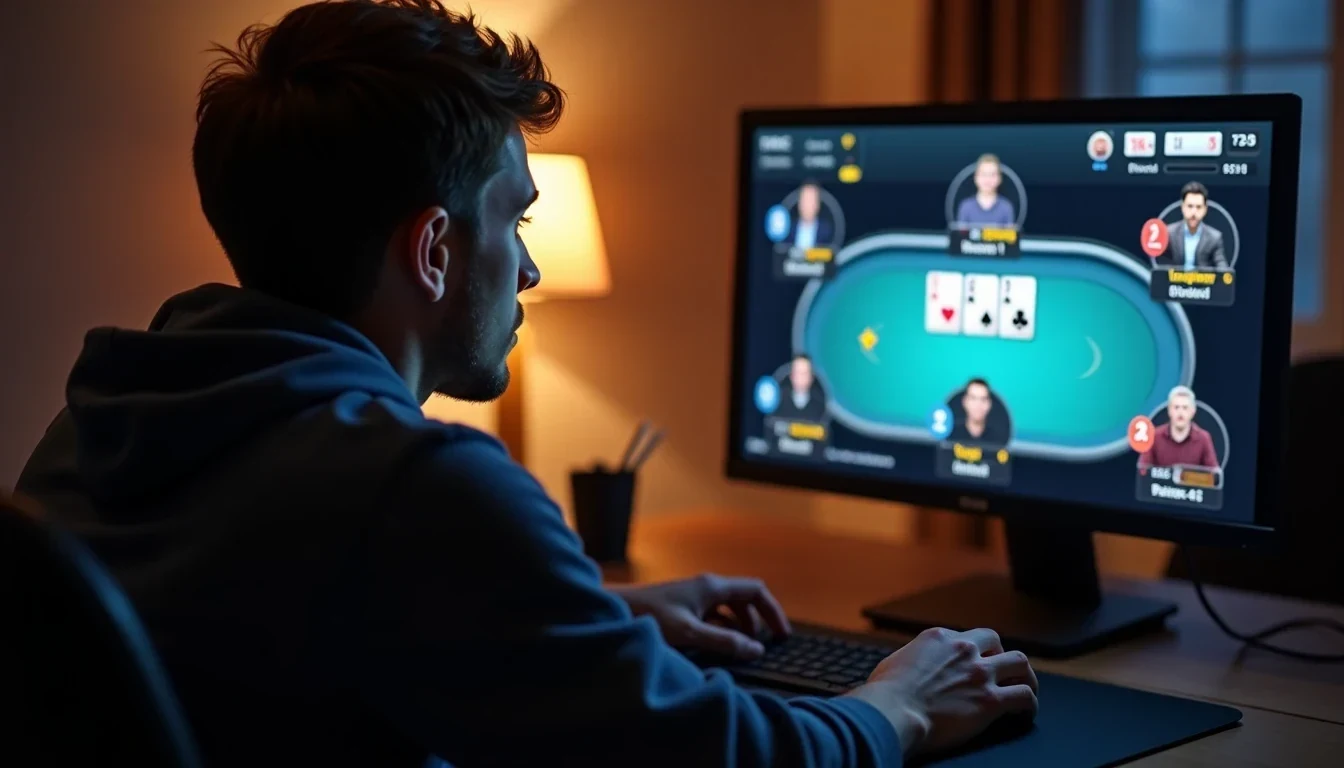
The most expensive lie in online poker is that ghosting leaves no trace. Watch a $5 rebuy grinder for three hours, then watch them again at a Sunday Major final table. The difference can be jarring enough to make you check if the account disconnected and reconnected under someone else’s hands. It did not. Someone else simply sat down in the room behind the screen.
The Ghost Arrives on Schedule
Ghosting pays best where a single decision swings the most equity. Specialists are called in for final tables, satellite bubbles, or heads-up matches for oversized bounties. They are not called in before these moments. The account holder grinds their own way through the field, then a break, disconnect, or pause happens, and a different brain takes over the play.
GGPoker and CoinPoker both draw their line in the same place: one player to a hand, one mind driving live decisions. Their terms treat third-party assistance during action as a severe breach, not a gray area. Account sharing, screen-based direction, and real-time coaching from someone watching the stream all violate the core premise that the person registered is the person deciding. Public streaming stays permitted, but acting on viewer advice in real time does not.
The Tells That Survive Scrutiny
Sudden precision in bet sizing is the loudest alarm. A player who fired 2/3 pot and full pot all afternoon starts clicking 37% in three-bet pots and 71% on double-barrel turns. These are solver outputs, not intuition. They require calculation time the account holder never took.
Decision speed tells its own story. The same player who snap-folded KJo to a single raise now burns their entire time bank on an obvious river value bet, then instantly jams a complex turn overbet that should require range construction. The delay on simple spots suggests someone else is being consulted. The instant action on hard spots suggests the answer arrived pre-loaded.
Strategic quality jumps after breaks with suspicious regularity. A satellite bubble arrives and the player who butchered ICM all tournament suddenly folds every borderline spot with perfect discipline. The heads-up match begins and they range opponents with the precision of someone who does this for a living. These are not study group breakthroughs; study groups happen between sessions.
The Line Between Preparation and Live Help
Poker has always run on collaboration. Staking, swapping action, reviewing hand histories with a coach, grinding solver outputs in a Discord group—none of this is ghosting. The distinction is timing. Preparation happens before cards are in the air. Execution belongs to one brain once cards are in the air.
A player can sell eighty percent of themselves, study with a stable for forty hours a week, and stream every hand to a thousand viewers. They cannot receive real-time direction on whether to call the river shove. The “one player to a hand” principle does not ban teamwork. It bans outsourcing the moment of decision.
Protecting the Game and Your Edge
Alert players who spot these patterns serve the player pool by reporting through official channels. GGPoker provides suspect-player reporting tools. CoinPoker routes concerns through dedicated support. The report should include specifics: hand numbers, timestamps, and the exact nature of the shift. “Played different” wastes everyone’s time. “Used 41% pot sizing in three consecutive three-bet pots after never deviating from 2/3 pot in 200 hands, following a 12-minute disconnect at the final table break” gives security something to trace.
Ghosting is not a victimless edge. Every ghosted final table seat denies a legitimate player their shot. Every ghosted bounty is money extracted under false pretenses. The tells are there for players who know what live poker looks like versus what coached-in-real-time poker looks like. Learn them, watch for them, and do not let the lie that ghosting leaves no trace cost you your next deep run.