
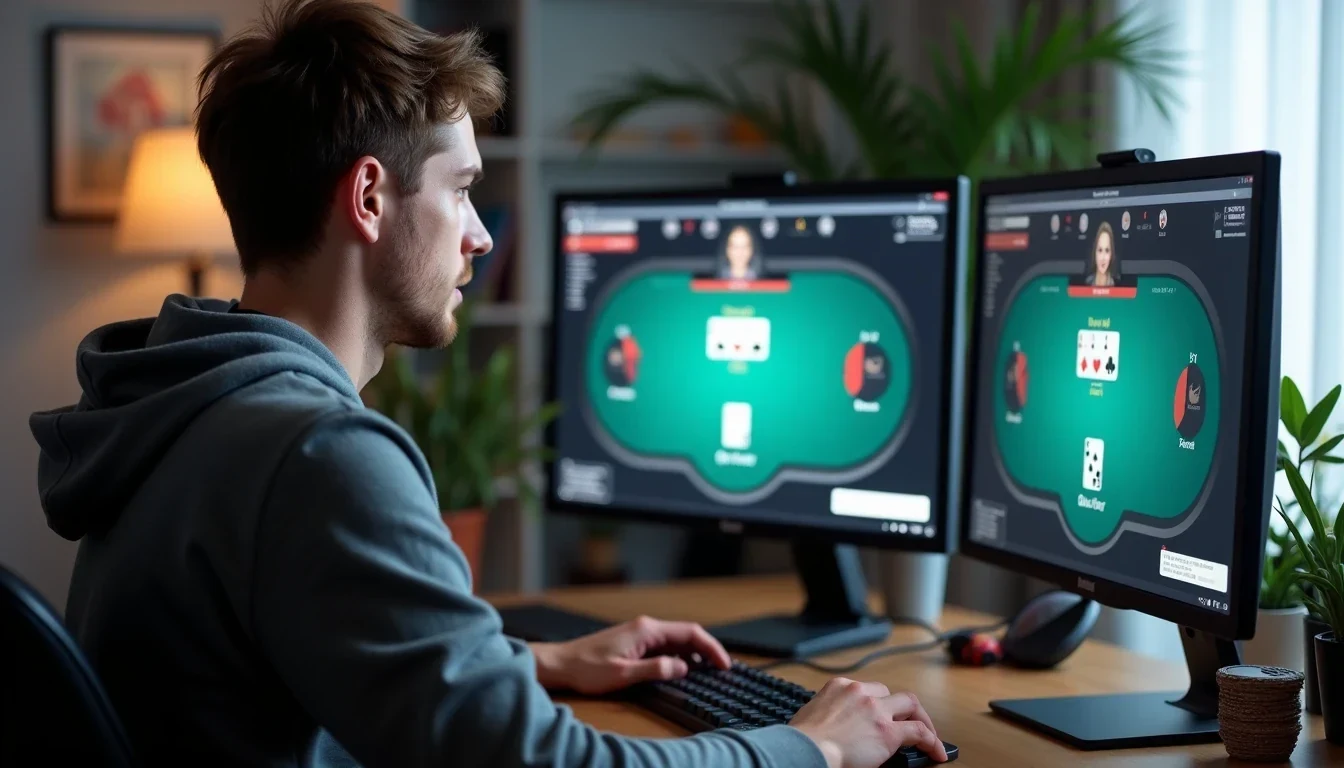
You can run a solver for six hours on Sunday, load the charts Monday morning, and fire up a HUD the same afternoon. Three sites have three different account statuses. PokerStars shrugs at the HUD but comes down hard on anything automating your click. GGPoker’s 2026 policy draws the line at real-time assistance and virtual-machine setups. CoinPoker green-lights its own integrated tools but flags third-party opponent-analysis software. The same stack of utilities that marks you as a serious student on one platform marks you for confiscation on another. Players who treat software policy as a pre-flight checklist keep their roll. Everyone else learns the hard way.
The Split on Study Tools
The fault line runs between preparation and live assistance. A static chart you consult before logging in is study. The same chart pinned to your second monitor while cards are in the air is a policy violation at several major rooms. Solvers occupy the greyest zone: running them between sessions is universally tolerated. Any attempt to feed live hand data into them during play crosses into prohibited territory.
PokerStars allows HUDs that surface aggregated historical data on opponents. The platform draws its hard line at automation: bots, bet-size randomisers, and any service piping advice based on the current game state are banned. GGPoker’s 2026 rules go further, prohibiting external charts during play, data mining, remote-access tools, and virtual-machine setups alongside the standard bot and RTA prohibitions. CoinPoker takes the opposite structural approach, embedding selected tools into its client while explicitly banning third-party HUDs and opponent-analysis software. Partypoker lands in the restrictive camp, blocking most third-party software and remote-access programmes outright.
This divergence turns “standard equipment” into a dangerous assumption. A HUD you’ve run for years on Stars becomes a liability the moment you open CoinPoker without checking the permitted list.
The Hidden Traps
Table-management software, hotkeys, and hand-history converters sit in overlooked territory. A hotkey that folds your BB faster is innocent efficiency to some rooms, but automated action to others. Hand-history converters that let you review sessions in external tools can trigger data-mining flags if they scrape or aggregate beyond personal use. Screen sharing during a session, even to a trusted study partner, reads as remote assistance under several policies. VPNs and remote-access software compound the problem. A player travelling with a laptop, connecting through a virtual machine for security, can trigger GGPoker’s virtual-machine ban without realising the policy shifted in 2026.
Streaming adds another layer. Broadcasting your session with a HUD overlay that is legal for you may expose viewers to software they cannot legally run on their own client. The liability stays with each individual account.
A Pre-Session Routine That Saves Bankrolls
Smart players build a two-minute check into their login sequence. Pull the room’s prohibited-tools page directly from the source, not a forum thread from last year, because policies shift. GGPoker’s 2026 update is a case study in how fast the ground moves. Verify the specific categories that affect your setup: HUDs, charts, solvers, hotkeys, table management, screen sharing, remote access, VPNs, converters, and streaming permissions.
Then audit your running processes. That old equity calculator lingering in your system tray, the macro software you installed for work, the remote-desktop client you forgot to close: any of these can trigger detection systems that do not distinguish intent from presence. The confiscation risk is not theoretical. Rooms enforce these policies with account freezes and fund seizures, not warnings.
The players who survive long-term treat software compliance as part of game selection. They know which rooms reward preparation and which punish the tools that preparation requires. They do not assume that what was legal last month remains legal now. They never, under any circumstances, leave an unchecked utility running in the background while their bankroll is on the table.